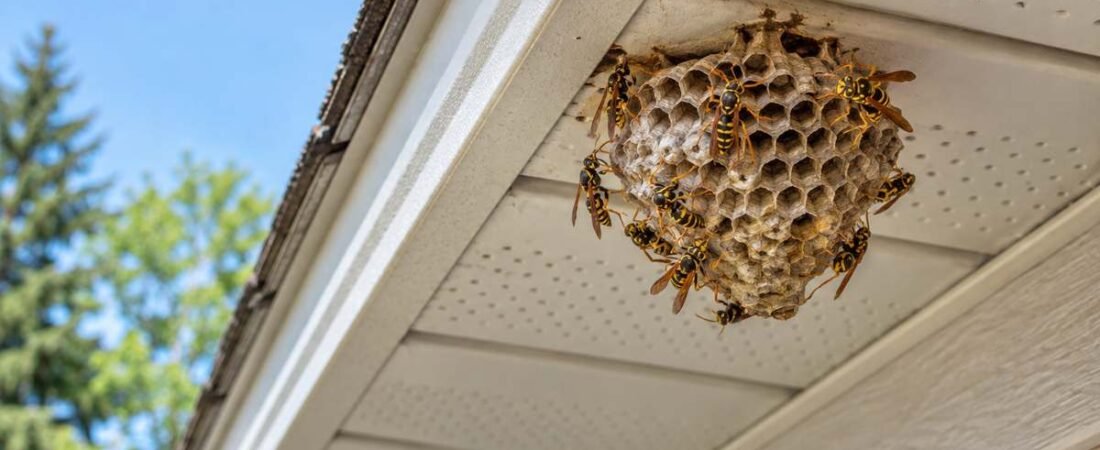
Seeing two wasps fly past a porch does not necessarily mean a nest is nearby. Seeing insects enter the same gap beneath the soffit every few minutes is different. Wasps can build exposed paper nests or occupy sheltered cavities, and their response to disturbance can make casual do-it-yourself removal dangerous.
Before reaching for a ladder or spray, work out whether the nest is active, where people may encounter the insects and what can be done safely from the ground.
Watch the Flight Pattern From a Safe Distance
Observe from indoors or a spot well away from the suspected entrance. Is traffic concentrated at the corner of a soffit, behind a shutter or through a gap beside fascia? Photograph the area using your phone’s zoom. Do not put your face near a hole to look for insects, and do not tap on the structure to see what comes out.
Some solitary wasps visit small openings without forming a large defensive colony. Social wasps, however, may defend an established nest, particularly when people walk directly beneath it. You cannot reliably judge colony size from the few insects visible outside. A small entrance may lead to a hidden nest in a roof or wall void.
If the flight path crosses a busy doorway, temporarily direct people to another entrance. Bring pets indoors until the risk has been assessed.
Identify the Areas That Need Immediate Protection
Look at the arrangement of the property rather than just the nest. Is it above a patio table, a child’s play area, a front step or a window regularly opened for ventilation? A nest above a rarely used shed may call for a different response from one beside the only entrance to a home.
A Barrie pest control technician can inspect the site and explain whether an extermination service is warranted. The visit should establish the nest location, access limitations and precautions for anyone with a history of serious sting reactions. Tell the technician if wasps have already entered the living space.
Keep people from standing below the opening while you wait. Do not block an active entrance with foam or caulking: insects in a concealed void may seek another exit, including toward indoor rooms. Do not use fire, boiling water or improvised chemicals around soffits or electrical fixtures.
Remove Everyday Attractants Without Approaching the Nest
Outdoors, wasps may be drawn toward uncovered drinks, discarded food and sugary residue around recycling. Put lids on waste containers, rinse sticky cans, clear dropped fruit and remove leftover pet food. These steps can reduce encounters around eating areas but will not eliminate an established nest beneath a roof.
Health Canada’s wasp control information distinguishes their useful role in nature from situations where nests pose a practical risk. It also recommends early observation and prevention rather than indiscriminate killing. A wasp visiting garden flowers is not, by itself, a reason to treat the entire yard.
Inspect outdoor dining areas before gatherings, but avoid swatting at a wasp that lands nearby. Calmly move away from active flight routes. Anyone who develops signs of a severe allergic reaction after a sting needs urgent medical attention; pest advice should never delay emergency care.
Ask How a Roofline Nest Will Be Reached
A nest under high eaves may require ladders, specialist access equipment or working around siding and roofing components. A legitimate extermination service should explain the intended access, safety boundaries and whether anyone needs to remain away from windows or outdoor areas during treatment. Ask what will happen if the nest entrance is inside a narrow cavity.
Do not assume every visible paper structure must be physically removed at once. The safest sequence can depend on nest location and activity, and inaccessible material may remain after the colony is controlled. What matters is whether insects are still using the site and whether the opening should later be repaired.
Avoid hiring someone who promises to spray blindly into every exterior gap. Targeting the identified nest is different from treating a building indiscriminately. The plan should also protect garden areas and follow the pesticide label for the intended use.
Prevent the Same Roofline Gap Being Used Again
When activity has ended, examine the soffit, fascia and nearby trim from a safe vantage point. Have damaged screening, open joints or loose boards repaired by a qualified person. Keep gutters maintained and watch for openings that become more obvious after winter weather. Prevention is easier before a colony establishes itself.
In spring and early summer, make a brief visual check of eaves, porch roofs and sheds. Record repeated traffic early, especially near areas used by children or guests. A pest control technician can advise whether a new observation represents a nest or harmless foraging activity.
For product-related precautions, consult Health Canada’s pesticide safety guidance. The right outcome is a usable entrance and patio with the actual nest risk addressed—not a risky attempt to reach high soffits with a ladder and an aerosol can.